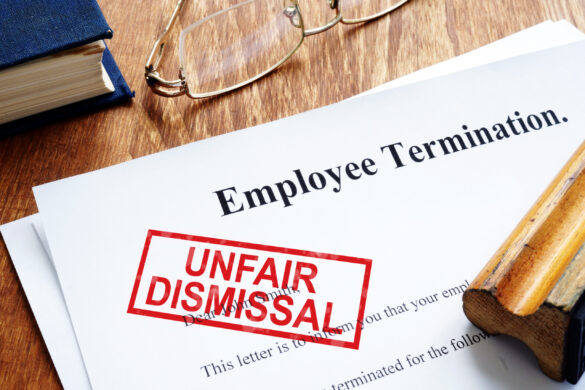
If you have been fired after reporting misconduct at work, you may be wondering whether your employer crossed a legal line. Maryland is an at-will employment state, which means employers can generally terminate employees for almost any reason, or no reason at all. But there are important exceptions. In some situations, a termination may qualify as wrongful discharge, sometimes called abusive discharge, when the firing violates a clear public policy.
A recent Maryland appellate decision, White v. Diggs, No. 1489, Sept. Term 2024 (Md. App. Ct. Mar. 30, 2026), is an important reminder that these claims are narrower than many employees realize. The case highlights a critical issue in workplace retaliation cases: how, where, and why an employee reports misconduct can make all the difference.
Understanding the “Public Policy” Exception
Wrongful discharge claims are based on the idea that employers cannot terminate workers for reasons that violate a clear mandate of public policy.
In practice, that usually means an employee was fired for:
- Refusing to engage in illegal conduct
- Filing a workers’ compensation claim
- Serving on a jury
- Exercising rights protected by statute
- Reporting illegal conduct under a qualifying whistleblower law
At the same time, courts generally do not recognize wrongful discharge claims simply because a termination felt unfair or retaliatory. The protection is limited and highly fact-specific.
Why the White v. Diggs Decision Matters
In White v. Diggs, a labor union employee claimed he was fired after telling an internal union panel that he believed a union officer had engaged in sexual misconduct and misused union funds.
Even assuming the allegations were true, the court ruled against him. The decision turned on several issues that courts regularly look at in wrongful discharge cases.
First, no law required him to make the report. The court viewed his statements as voluntary rather than legally compelled.
Second, he raised his concerns internally instead of reporting them to law enforcement or a regulatory authority. The court also noted that he was not proceeding under a whistleblower statute and was not refusing to participate in illegal conduct himself.
Taken together, those facts were enough for the court to conclude that the termination did not violate Maryland public policy.
Internal Complaints May Not Be Enough
One of the most important takeaways from the case is the distinction courts often draw between internal complaints and reports made to outside authorities.
Employees frequently believe that reporting misconduct to HR, management, or an internal committee is enough to protect them from retaliation. In some situations, it may be. In others, it may not.
Courts tend to look closely at whether the employee was acting under a specific legal duty or under the protection of a whistleblower statute. They also examine where the report was made and whether the employee followed procedures required by law.
Depending on the circumstances, employees may have stronger protections when reporting concerns to agencies such as:
- OSHA
- The EEOC
- State licensing or regulatory boards
- Law enforcement
- The Department of Labor
Different industries and professions may also be covered by specific state or federal whistleblower laws, each with its own procedural requirements and deadlines.
What This Means for You Before You Report
If you suspect your employer or a coworker is doing something illegal, and you are worried about retaliation, please do not just speak up and hope for the best. Before you report, take these steps seriously:
- Identify the right authority. Reporting to the police, the EEOC, OSHA, the Maryland Department of Labor, or the proper state licensing or regulatory board is generally far stronger protection than telling a manager, an HR department, or an internal committee.
- Find out if a whistleblower law applies to you. Maryland has specific whistleblower statutes for healthcare workers, public employees, and others. Federal laws cover additional categories. These statutes have strict deadlines and specific procedures that must be followed.
- Do not assume an internal complaint protects your job. Often it does not.
- Document everything. Save emails, texts, dates, names, performance reviews, and any written warnings.
- Talk to an employee-side attorney before you report, if you can. A short conversation can be the difference between a protected report and one that a court will not recognize.
What If You Were Already Fired?
Employees who were terminated after reporting misconduct or refusing to engage in unlawful conduct may still have legal options, even if the situation initially appears unclear.
These claims are highly fact-specific. Courts often examine what was reported, who received the report, whether a statute protected the conduct, and whether the employee was performing a legally protected act at the time.
Because employment claims are subject to strict deadlines, waiting too long to evaluate a potential case can create additional problems.
Representing Employees Across Maryland and the DC Metro Area
Lebau & Neuworth represents employees in matters involving wrongful termination, retaliation, discrimination, harassment, and wage disputes. Based in Baltimore, our attorneys have decades of experience handling complex employment law matters for workers throughout Maryland and the DC metro area.
We focus exclusively on representing employees, not employers. Our team works closely with clients to evaluate workplace claims, explain their legal options, and pursue strategies tailored to their specific circumstances.
If you believe you were wrongfully terminated after reporting misconduct or raising workplace concerns, contact Lebau & Neuworth to discuss your situation.