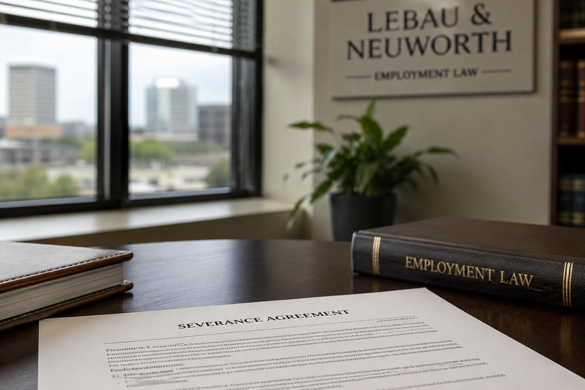
Losing your job is stressful enough. Then your employer hands you a severance agreement or separation agreement and asks you to sign it quickly so you can receive your severance pay. It's a lot to process during an emotional moment, and many Maryland employees feel pressured to sign without fully understanding what they're agreeing to.
Take a breath. A severance agreement is a legal contract, and you have more options than you might think. At Lebau & Neuworth, we've spent decades helping employees across Maryland review severance agreements, understand their legal rights, and negotiate better outcomes when appropriate. Before you sign anything, here's what you should know.
What Is a Severance Agreement?
A severance agreement is a contract in which your employer offers you something of value, usually a lump-sum payment or continued pay, and sometimes extended benefits, in exchange for giving up certain legal rights. Almost every severance agreement includes a release or waiver stating that you agree not to sue the company for claims related to your employment.
That tradeoff is the heart of the agreement. The severance pay is the benefit you're receiving, while the release of claims is what your employer wants in return. Before accepting an offer, it's important to understand exactly which rights you're giving up.
It's also worth knowing that, in most situations, you are not automatically entitled to severance pay. Maryland is an at-will employment state, and unless your employment contract, offer letter, collective bargaining agreement, or company policy guarantees severance, your employer is generally offering it voluntarily. In many cases, that's because the company wants you to sign a release of potential legal claims.
Should You Sign a Severance Agreement Right Away?
The short answer is no.
You almost never have to sign a severance agreement on the spot. Once you sign and any applicable revocation period expires, the agreement is typically binding. That means you may lose the ability to pursue legal claims you didn't even realize you had.
If you're being pressured to sign immediately, resist the urge to rush. Most employers will allow time for you to review the agreement. If an employer creates unnecessary urgency or threatens to withdraw the offer unless you sign immediately, that's worth taking seriously.
Your Legal Rights Before Signing a Severance Agreement
Federal law provides additional protections for certain employees.
If You're 40 or Older
If you're 40 or older and the agreement asks you to waive age discrimination claims, the Older Workers Benefit Protection Act (OWBPA), which amended the Age Discrimination in Employment Act (ADEA), requires that the agreement:
- Give you at least 21 days to consider the agreement before signing, or at least 45 days if the agreement is part of a group layoff or reduction in force.
- Give you 7 days after signing to revoke your acceptance.
- Advise you in writing to consult an attorney before signing.
- Specifically reference the ADEA rather than broadly waiving "all claims."
- Provide something of value beyond what you're already entitled to receive.
If these requirements are not met, the age discrimination waiver may not be enforceable.
For group layoffs, employers must also provide information about the ages and job titles of employees who were and were not selected for the layoff. That information can sometimes reveal evidence of age discrimination.
If You're Under 40
Even if these federal protections don't apply, you should still review the agreement carefully before signing. Many employers provide employees with time to consider the agreement, and there's rarely any downside to asking for additional time if you need it.
What to Review Before Signing a Severance Agreement
Severance agreements are drafted by your employer's attorneys to protect the company's interests. Before signing, pay close attention to the following provisions.
Severance Pay
Review how much you're being offered, whether you'll receive a lump-sum payment or installments, when payments begin, and whether payment depends on meeting additional conditions.
Release of Claims
Understand exactly which legal claims you're agreeing to waive. Many agreements include broad releases covering wrongful termination, workplace discrimination, retaliation, wage claims, and other employment-related disputes.
Wages and Benefits You've Already Earned
Your final paycheck and earned benefits should not be confused with severance pay.
Under the Maryland Wage Payment and Collection Law, employees are generally entitled to receive wages they've already earned, along with any accrued leave that company policy requires to be paid out. Those payments generally should not depend on signing a severance agreement.
Review whether the agreement addresses continued health insurance coverage and whether your employer will contribute toward COBRA premiums.
Confidentiality and Non-Disparagement Clauses
These provisions may limit what you're allowed to say about your employer or even whether you can discuss the agreement itself. Read these sections carefully and consider whether the restrictions are reasonable. In some situations, employees negotiate mutual non-disparagement provisions that apply to both sides.
Non-Compete and Non-Solicitation Clauses
Some severance agreements contain restrictions on where you can work next or which customers or employees you may contact. These provisions can directly affect your future employment opportunities, so it's important to understand exactly what they require.
References and Rehire Eligibility
Some employees successfully negotiate a neutral employment reference or an agreed-upon explanation for why they left the company. It's also worth reviewing whether the agreement addresses your eligibility for future employment with the organization.
Ongoing Obligations
Many agreements include provisions requiring you to return company property or cooperate with future legal matters involving your former employer. Make sure you understand any responsibilities that continue after your employment ends.
If any part of the agreement is unclear, don't assume it's harmless. Ask questions before signing.
Could Your Legal Claims Be Worth More Than the Severance Offer?
This is where many employees leave money on the table.
If your employer is asking you to sign a severance agreement, it's worth considering whether you may have legal claims that are more valuable than the severance package itself.
Ask yourself questions like:
- Were you treated differently because of your race, sex, age, disability, religion, pregnancy, or another protected characteristic?
- Were you fired after reporting workplace harassment, discrimination, unpaid wages, or safety violations?
- Were you denied overtime pay or other wages you earned?
- Do you believe your termination violated state or federal employment laws?
If any of these situations apply, signing a severance agreement could prevent you from pursuing those claims later. Before giving up those rights, it's worth understanding what your case may be worth.
Can You Negotiate a Severance Agreement?
Many employees assume the first severance offer is final. In reality, severance agreements are often negotiable.
Depending on your circumstances, you may be able to negotiate:
- A larger severance payment.
- Additional weeks of salary continuation.
- Employer contributions toward health insurance.
- A narrower release of legal claims.
- A mutual non-disparagement provision.
- Changes to restrictive non-compete language.
- A neutral employment reference.
- Additional time to review the agreement.
A well-supported request, especially one made through an experienced employment attorney, can often lead to a better outcome.
Don't Miss Important Severance Agreement Deadlines
If you decide the agreement is fair, pay close attention to every deadline.
Keep track of when your review period ends and, if applicable, when the 7-day revocation period expires after signing. Missing a deadline could mean losing the severance offer or your opportunity to change your decision.
As soon as you receive the agreement, make note of every important date.
Speak With a Maryland Employment Lawyer Before Signing a Severance Agreement
A severance agreement may affect your legal rights long after your employment ends. Having an experienced employment lawyer review the agreement can help you understand what you're being asked to give up, identify potential legal claims, and determine whether the terms can be improved through negotiation.
At Lebau & Neuworth, we've represented employees across Maryland and the Washington, D.C. metro area since 1981. We help clients review severance agreements, evaluate potential employment law claims, negotiate stronger severance packages, and protect their rights before they sign.
If you've been presented with a severance agreement, contact Lebau & Neuworth today to schedule a confidential consultation. We'll review the agreement, answer your questions, and help you make an informed decision before you sign.